Cold Plunge for Mental Health: How Cold Water Therapy May Reduce Anxiety and Reset the Nervous System
What if three minutes in 50-degree water could shift your mood, calm your anxiety, and leave your nervous system measurably more resilient for the rest of the day? It sounds like a stretch — until you look at the data. A controlled study found that a single cold-water immersion raised dopamine by roughly 250% and norepinephrine by more than 500%, with mood-elevating effects lasting hours afterward. That is not a marketing claim. That is neurochemistry.
Cold plunge for mental health has moved from fringe biohacking to a serious topic in clinical research. May is Mental Health Awareness Month, so it is the right moment to look at what cold water immersion actually does for anxiety, mood, and stress — and what it does not. In this guide, you will learn the mechanisms behind the effect, what the most recent research shows, the safety considerations that matter, and exactly what to expect when you book a session at Optimum Health in Inver Grove Heights.
What Is a Cold Plunge?
A cold plunge is a brief, controlled immersion in cold water — typically between 38°F and 55°F — for two to five minutes. Unlike taking a cold shower, a true cold plunge submerges the body up to the neck so the cardiovascular and nervous systems get a full hydrostatic and thermal stimulus at once.
The practice is sometimes called cold-water immersion, ice bathing, or cold thermogenesis. While athletes have used it for decades to manage post-workout inflammation, a growing body of neuroscience research is now examining its effect on the brain — particularly on the systems that govern mood, focus, anxiety, and emotional resilience.
The Neuroscience: How Cold Plunge Affects the Brain
When the body enters cold water, the response is fast and coordinated. Within seconds, the sympathetic nervous system activates, blood vessels constrict, and a cascade of neurotransmitters flood the bloodstream. Three of those neurotransmitters are especially relevant for mental health.
Norepinephrine rises sharply during cold exposure. This is the brain's alertness and focus chemical, and elevated norepinephrine is associated with sharper attention and reduced rumination. In a frequently cited study, norepinephrine increased by roughly 530% after cold water immersion and remained elevated for over an hour.
Dopamine climbs more slowly but stays elevated longer. The same study measured a 250% rise in dopamine that persisted for approximately two hours after the plunge. Dopamine drives motivation, reward, and the sense of forward momentum people often report after cold exposure — what users describe as feeling "switched on" for the rest of the day.
Beta-endorphins are released as part of the body's stress response and contribute to the post-plunge calm and mild euphoria many people describe. Together with the dopamine and norepinephrine surge, these endorphins help explain why a cold plunge feels difficult during the immersion and surprisingly good in the minutes that follow.
A 2023 fMRI study published in Biology found that even brief cold-water immersion increased functional connectivity between the brain's default mode network and salience network — regions involved in emotional regulation and self-awareness. Participants reported significant improvements in positive affect, alertness, and a sense of being "in control."
Cold Plunge for Anxiety and Stress
Anxiety, at its physiological core, is a nervous system stuck in sympathetic dominance — the fight-or-flight branch of the autonomic system. Counterintuitively, deliberately stressing the body with cold may help retrain that system.
Each plunge is a short, intense stressor that the body learns to recover from. With repeated exposure, heart rate variability — a key marker of vagal tone and stress resilience — tends to improve. Higher heart rate variability is associated with lower baseline anxiety, better emotional regulation, and faster recovery from psychological stress. Research suggests that this type of repeated, controlled stress exposure is a form of hormesis: a small, manageable challenge that strengthens the body's adaptive capacity.
A 2025 systematic review and meta-analysis published in PLOS One examined the effects of cold-water immersion on health and well-being. While the authors were careful about the limits of the evidence, they reported that participants in regular cold-water immersion programs experienced reductions in perceived stress and improvements in subjective well-being. The Wim Hof Method — which combines cold exposure with breathwork — has been associated with 20-30% reductions in symptom scores on standard depression and anxiety scales in small controlled trials.
The consistent finding across this research is not that cold plunging is a treatment for clinical anxiety disorders, but that it appears to act as a nervous-system regulator that may complement therapy, exercise, sleep, and other foundational mental health practices.
Cold Plunge and Mood: What the Research Shows
Beyond acute stress reduction, cold plunge for mental health has been studied for its effects on mood and depressive symptoms. A large observational study cited in recent reviews reported that 59% of regular cold-water immersers experienced a significant reduction in depressive symptoms over time. Smaller controlled trials have replicated reductions in depression and anxiety scores after structured cold exposure programs.
The proposed mechanisms include sustained dopamine elevation, reduced systemic inflammation (which is increasingly linked to depression), improved sleep quality, and the psychological satisfaction of completing something difficult on purpose. That last factor matters more than it sounds. Self-efficacy — the felt sense of being capable of doing hard things — is itself a protective factor against depression.
It is important to be clear about what the research does not show. Cold plunging is not a replacement for evidence-based mental health care, medication, or psychotherapy when those are indicated. The most rigorous researchers in this area frame cold exposure as an adjunctive tool — something that supports mental health alongside, not instead of, conventional treatment. If you are managing a clinical mental health condition, talk with your provider before adding cold exposure to your routine.
Who Should Be Cautious With Cold Plunge?
Cold immersion is a real cardiovascular and neurological stimulus. It is not appropriate for everyone. The following people should consult a physician before cold plunging:
Individuals with heart disease, uncontrolled high blood pressure, or arrhythmias
People with a history of cold urticaria or Raynaud's syndrome
Pregnant individuals
People with seizure disorders
Anyone on medications that affect cardiovascular response or thermoregulation
For healthy adults, the most common side effects are mild and transient — shivering, brief light-headedness, or numb extremities for a few minutes after exit. These resolve quickly with warming and movement. The protocols used at Optimum Health are designed to deliver the benefits of the cold stressor while keeping duration and temperature within well-tolerated ranges.
What to Expect at Optimum Health in Inver Grove Heights
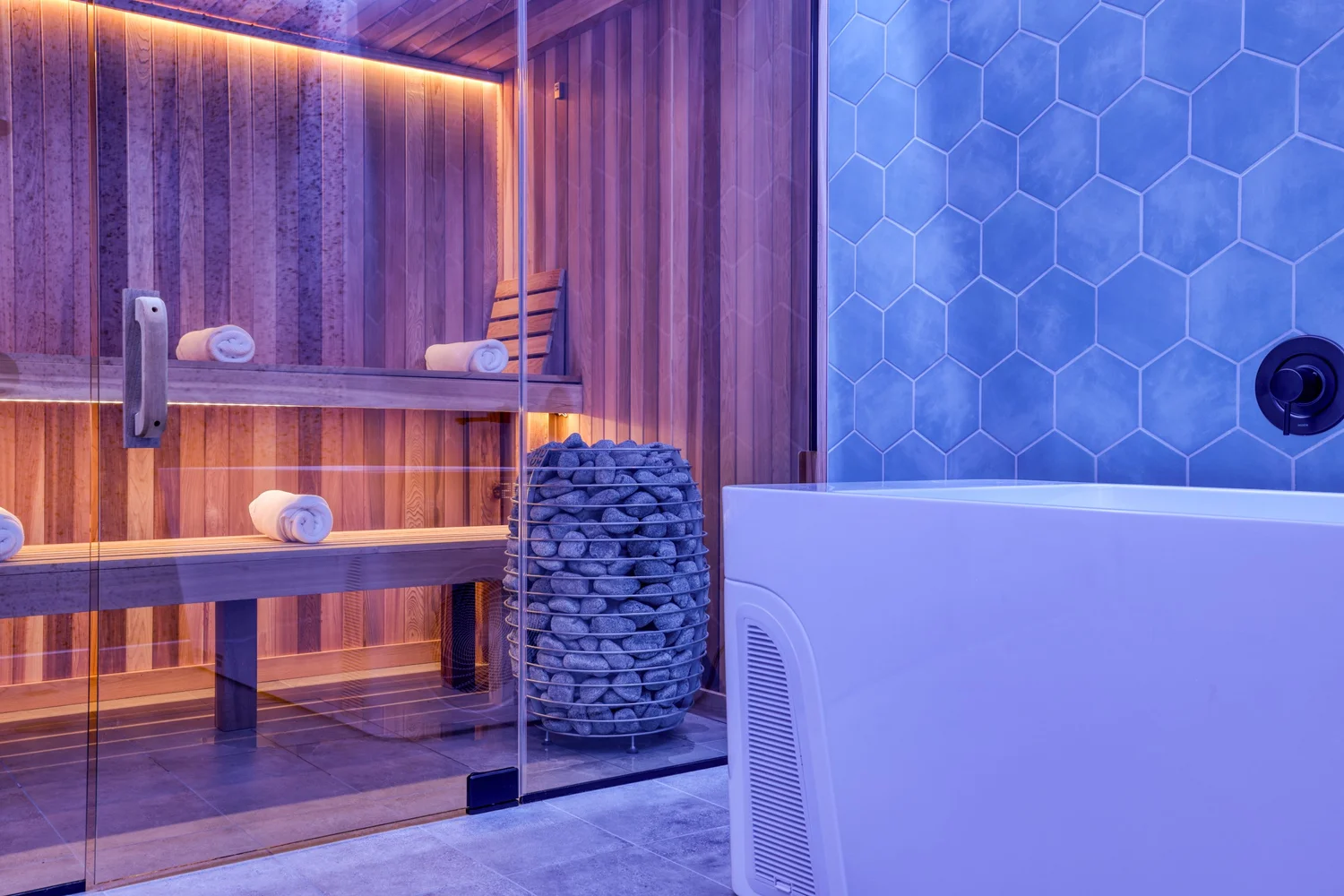
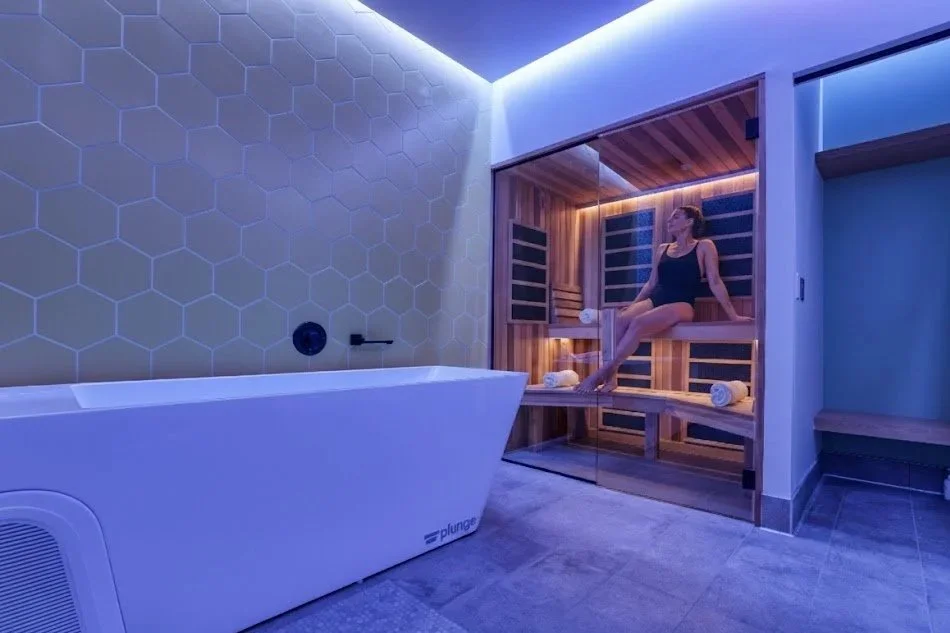
At Optimum Health, the cold plunge experience is designed to be clinical, private, and approachable — even if it is your first time. Each cold plunge session takes place in a completely private suite. There is no shared bathhouse layout and no audience. You step in, you do the work, and you recover on your own schedule.
The plunge tub itself is filtered and temperature-controlled, typically held in the 45-50°F range — cold enough to deliver the documented neurochemical response without unnecessary extremity stress. Most first-time guests immerse for one to two minutes. Regulars build up to three to five minutes over time. Our staff walks you through breath pacing on your first visit, which is the single biggest determinant of how the experience feels.
For mental health support specifically, many guests pair cold plunge with infrared sauna in a contrast therapy protocol. The thermal swing — heat, then cold, then heat again — appears to amplify the nervous-system reset effect and is a strong fit for stress, sleep, and mood support. Others integrate cold plunge into a broader functional medicine plan that addresses sleep, gut health, hormones, and inflammation as the foundations of mental health.
Optimum Health is located in Inver Grove Heights, MN, and serves clients across the Twin Cities metro — including Eagan, Apple Valley, South St. Paul, Mendota Heights, and Saint Paul. Our team is trained to work with people who are new to cold therapy, athletes optimizing recovery, and patients integrating cold plunge into a clinically guided wellness program.
How Often Should You Cold Plunge for Mental Health?
The most cited target in the cold-exposure research community comes from Dr. Susanna Søberg's work: roughly 11 minutes of total cold-water exposure per week, broken into two to four sessions. Each session lasts two to five minutes depending on tolerance and water temperature.
For mental health support, consistency tends to matter more than intensity. Two well-tolerated, mid-week plunges will likely produce more durable mood and stress benefits than a single weekly extreme session. Many of our guests find that pairing cold plunge with morning sunlight, regular movement, and good sleep hygiene compounds the effect.
Frequently Asked Questions
Does cold plunging really help with anxiety? Research suggests that cold-water immersion may reduce perceived stress and acute anxiety symptoms by activating the parasympathetic nervous system after the initial sympathetic response, raising norepinephrine and dopamine, and improving heart rate variability over time. It is not a substitute for clinical care, but multiple studies report meaningful subjective improvements in stress and anxiety with regular practice.
How does cold plunge affect dopamine? A controlled study found that whole-body cold-water immersion raised dopamine by approximately 250% and that levels remained elevated for about two hours afterward. This sustained dopamine response is one of the leading explanations for the "alert, motivated, and clear" feeling many people report for the rest of the day after a plunge.
Is cold plunge better than cold shower for mental health? A full cold plunge produces a more reliable neurochemical response than a cold shower because the entire body is immersed and the temperature is controlled. Cold showers are an accessible starting point, but the dopamine, norepinephrine, and vagal-tone effects studied in research are most consistently replicated with whole-body cold-water immersion.
How long should a beginner stay in a cold plunge? First-time guests at Optimum Health typically stay in for 60 to 120 seconds. Most of the documented mental health benefits begin to appear in the two- to three-minute range. The goal is consistency over time, not heroic single sessions. Building tolerance gradually is safer and produces better long-term results.
Can cold plunge replace therapy or medication for depression? No. Cold plunge for mental health is best understood as a supportive practice that may amplify the effects of conventional treatment, sleep, exercise, and nutrition. Anyone managing clinical depression or anxiety should continue working with their mental health provider and discuss adding cold exposure as part of an overall plan.
The Bottom Line
Cold plunge for mental health is not a fad. The mechanisms — sympathetic activation followed by parasympathetic rebound, sustained dopamine elevation, improved heart rate variability, reduced systemic inflammation — are well-established physiology. The clinical evidence is still developing, but the early data, combined with the lived experience of thousands of regular practitioners, suggests cold plunge is one of the most accessible and immediate nervous-system tools available.
If you have been looking for a way to take consistent, physical action on your mental health this May — and you are in the Twin Cities — a cold plunge session is a concrete place to start.
Book a Cold Plunge Session at Optimum Health →
Optimum Health is a wellness and functional medicine clinic in Inver Grove Heights, MN, offering private cold plunge, infrared sauna, contrast therapy, PEMF, red light therapy, chiropractic, and functional medicine services. New guests receive over 50% off their first session.