Chiropractor for Sciatica and Lower Back Pain: A Clinical Guide for Twin Cities Patients
Roughly 40 percent of adults will experience sciatica at some point in their lives, and lower back pain is now the single leading cause of disability worldwide. If you are searching for a chiropractor for sciatica or persistent lower back pain in the Twin Cities, you are not looking for a quick adjustment and a cookie-cutter plan — you are looking for relief that actually lasts. This guide walks through what the research shows about chiropractic care for sciatica and lower back pain, how a thorough exam separates a disc problem from a piriformis problem, and what a complete treatment plan looks like at Optimum Health in Inver Grove Heights, Minnesota.
The goal here is honest, evidence-based information. Chiropractic care is not a cure for every cause of back pain, but for the right patient it is one of the safest and most effective non-surgical, non-opioid options available — and it is increasingly supported by high-quality clinical research.
What Sciatica Actually Is — and What It Is Not
Sciatica is not a diagnosis. It is a symptom: pain, numbness, tingling, or weakness that travels along the path of the sciatic nerve, the largest nerve in the body, which runs from the lower back through the buttock and down the back of the leg. The actual source of that nerve irritation can vary widely.
The most common cause is a lumbar disc herniation or bulge in the L4-L5 or L5-S1 region pressing on a nerve root. Other common causes include lumbar spinal stenosis (a narrowing of the canal that houses the spinal cord), spondylolisthesis, piriformis syndrome (where the deep gluteal muscle compresses the nerve), pregnancy-related changes, and degenerative disc disease. Lower back pain without sciatica is even more common and often involves muscular strain, facet joint dysfunction, sacroiliac (SI) joint irritation, postural overload from prolonged sitting, or early-stage disc issues.
The implication is simple but important: the right chiropractor will not treat every back pain the same way. A careful exam, a movement screen, and sometimes imaging are what separate an effective plan from a generic one.
What the Research Says About Chiropractic for Sciatica and Lower Back Pain
Several lines of evidence support chiropractic care as a first-line, conservative option for many patients.
Spinal manipulation reduces opioid use. A 2025 retrospective cohort study published in BMJ Open found that adults with sciatica who received chiropractic spinal manipulation were significantly less likely to be prescribed opioids and had a lower risk of opioid-related adverse drug events compared to patients receiving usual medical care alone. Given the ongoing opioid crisis, that finding alone is meaningful.
Manipulation matches or exceeds standard care for many patients. Multiple systematic reviews — including one published in Frontiers in Pain Research — have concluded that chiropractic spinal manipulative therapy is effective for both acute and chronic lower back pain, with effect sizes comparable to physical therapy and superior to providing patients with educational materials alone. A landmark New England Journal of Medicine trial demonstrated similar outcomes between chiropractic manipulation and physical therapy for low back pain, with both clearly outperforming education alone.
Specific neural mobilization techniques help radiating pain. Recent research on the sciatic nerve slider technique — a gentle neural mobilization performed in slump or supine position — has shown superior outcomes for pain and disability compared to conventional therapy alone in patients with lower back pain plus sciatic radiation. This is one example of how modern chiropractic has moved well beyond the stereotype of just "cracking backs."
Chiropractic care is cost-effective. Multiple health-economic analyses have found chiropractic care for spine pain to be cost-effective relative to medical-only care, largely because it reduces imaging, injections, and surgical referrals when used as a first-line conservative option.
What the research does not say: chiropractic care is a guaranteed fix. Some patients with severe disc herniations, progressive neurological deficits, or red-flag symptoms (loss of bowel or bladder control, saddle anesthesia, unexplained weight loss, fever) need imaging and a medical referral. A responsible chiropractor screens for these on the first visit and refers when appropriate.
How a Clinical Chiropractic Exam Should Work
If you are choosing a chiropractor for sciatica or lower back pain in Inver Grove Heights or the broader Twin Cities, the first visit should include a thorough history covering pain pattern, mechanism of onset, prior injuries, surgeries, medications, and red-flag screening. It should include orthopedic and neurological testing — straight leg raise, slump test, dermatome and myotome screening, reflex testing — to localize the source of pain. It should include a movement assessment of how you stand, walk, hinge, and squat, since those tell us how the nervous system is loading the spine. Imaging (X-ray or MRI) is appropriate in some cases but is not required for every patient on day one; modern guidelines actually discourage routine early imaging for uncomplicated lower back pain.
If a chiropractor offers a full treatment plan before completing this kind of evaluation, that is a yellow flag.
What Treatment Looks Like
A clinically driven chiropractic plan for sciatica or lower back pain typically blends several modalities, adjusted to where the patient is in their recovery.
Spinal adjustments (manipulation). The cornerstone of chiropractic care. High-velocity, low-amplitude adjustments restore segmental motion in the lumbar spine, sacroiliac joints, and surrounding regions. For patients who prefer a gentler approach — older adults, certain disc presentations, or patients with anxiety around manipulation — instrument-assisted or low-force techniques can be substituted with comparable outcomes for many conditions.
Neural mobilization. Sciatic nerve sliders and tensioners help restore healthy nerve glide through the spine and posterior chain. These are the techniques most often skipped at "in-and-out" chiropractic offices, but the recent literature suggests they meaningfully accelerate recovery for radiating pain.
Soft tissue and myofascial work. Tight piriformis, hamstrings, glute medius, QL, and lumbar paraspinals all influence sciatic symptoms. Manual therapy on these structures often unlocks adjustments that otherwise will not hold.
Targeted rehabilitation exercises. Hip hinging, glute activation, McGill big-three core stability work, and graded exposure to movement are what keep the gains. Without them, you are renting relief, not building it.
Lifestyle and ergonomic guidance. How you sit, how you sleep, how you train, and how much you move during the day all influence recurrence. A real plan addresses these.
How Optimum Health Approaches Sciatica and Lower Back Pain Differently
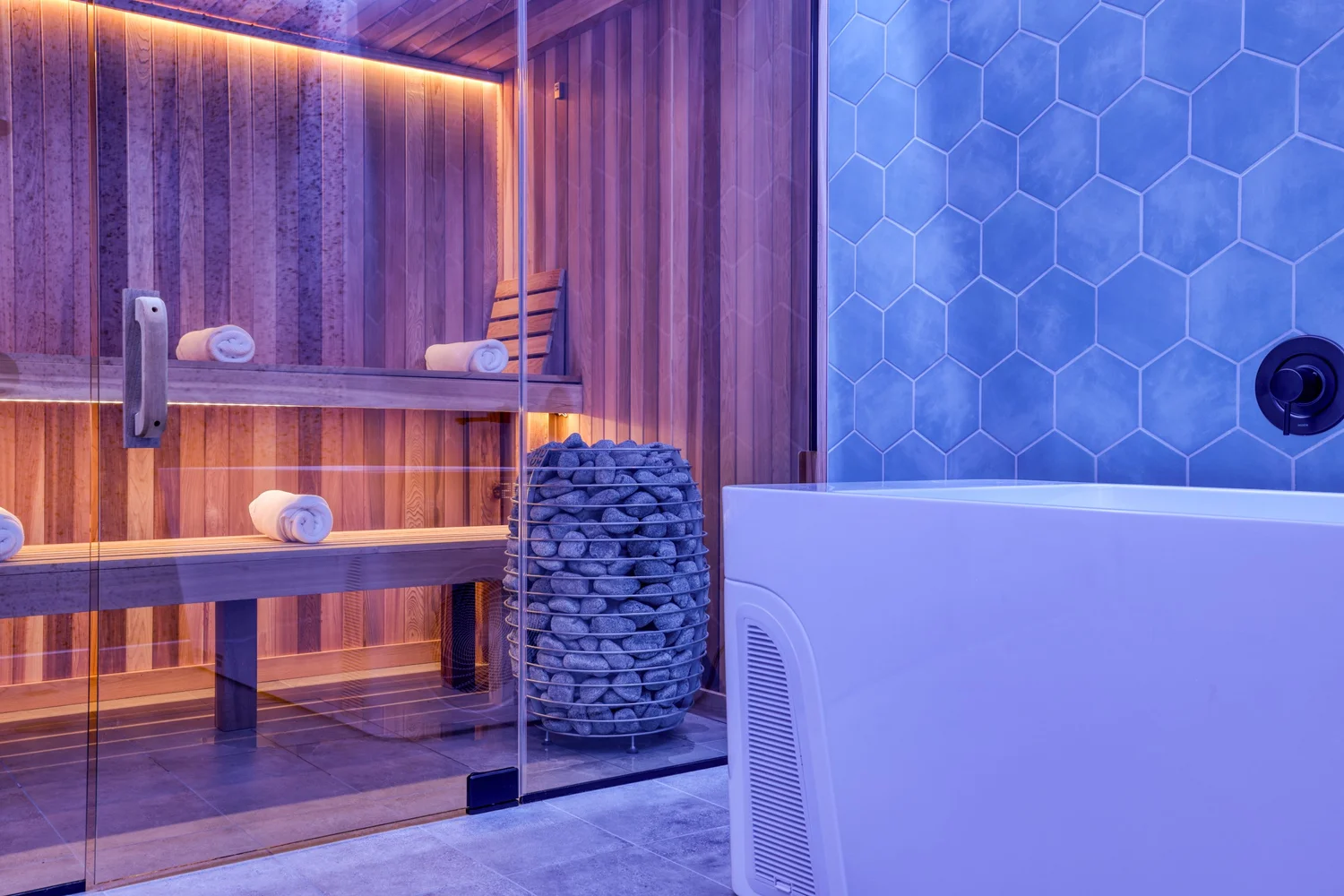
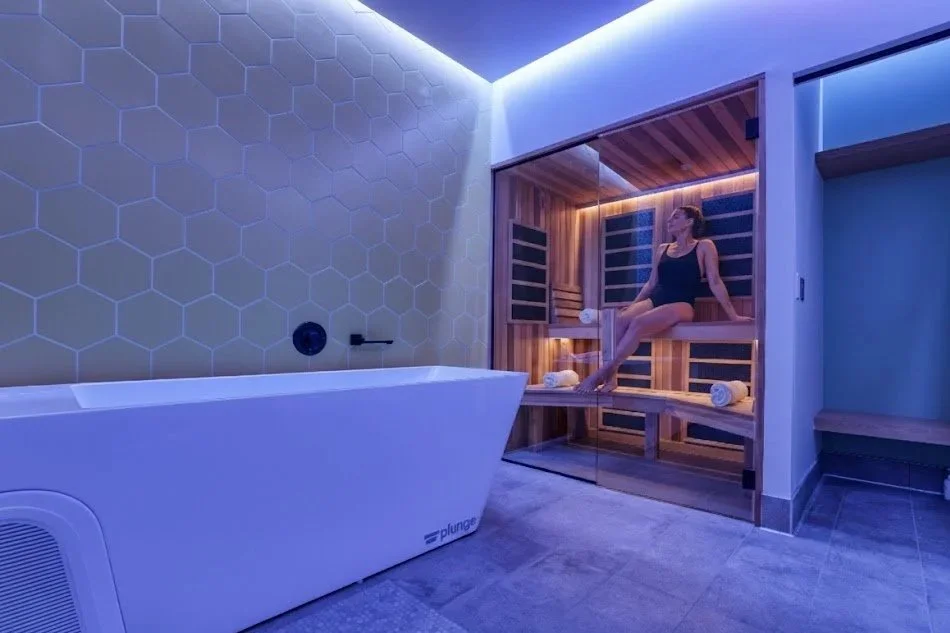
Optimum Health is the only clinic in Inver Grove Heights and the south Twin Cities metro area that combines clinical chiropractic care with infrared sauna, cold plunge, contrast therapy, PEMF therapy, red light therapy, and functional medicine in one location. For patients with sciatica or chronic lower back pain, that integration is not a marketing point — it is a clinical advantage.
PEMF (pulsed electromagnetic field) therapy supports recovery of inflamed nerve roots and surrounding tissue, and research suggests it may help reduce pain and improve function in chronic lower back conditions. A short PEMF session before or after an adjustment can extend the window in which the spine moves well and the nervous system stays calm.
Contrast therapy — alternating between infrared sauna and cold plunge — drives circulatory turnover, calms the systemic stress response, and helps reset a nervous system that has been in pain-driven fight-or-flight for weeks or months. For patients whose lower back pain is fueled by chronic stress and poor sleep (a common pattern), this is often the missing piece.
For patients whose pain is connected to underlying inflammation, gut health, hormonal shifts, or metabolic dysfunction, our functional medicine team can run the deeper workup that a stand-alone chiropractic clinic cannot. Lower back pain is rarely just a back problem. Treating it as if it is leaves outcomes on the table.
What to Expect at Your First Visit at Optimum Health in Inver Grove Heights
Your first appointment is set up for a real evaluation, not a sales pitch. You will spend time with Dr. Danny Pietruszewski going through your history and current symptoms. We will perform a focused orthopedic, neurological, and movement exam. If imaging is warranted, we will tell you why and either order it or coordinate with your primary care provider. You will leave with a clear, plain-English explanation of what we believe is driving your pain and a treatment plan that fits your life — including how often to come in, what to do at home, and how soon you should expect to feel different.
We see patients from across the south Twin Cities — Inver Grove Heights, South St. Paul, Eagan, Apple Valley, Rosemount, Cottage Grove, Mendota Heights, and beyond. If you are an athlete, a desk worker, a parent, a senior, or someone who has been told "just live with it," we want to hear your story before we propose a plan.
Frequently Asked Questions
Can a chiropractor help with sciatica caused by a herniated disc? Often, yes. Most disc-related sciatica responds to a combination of chiropractic adjustments, neural mobilization, soft tissue work, and targeted exercise — especially when started in the first several weeks. Severe or progressive cases may need imaging and possibly a surgical consult, and a responsible chiropractor will refer when appropriate.
How many chiropractic visits will I need for lower back pain? It varies. Acute mechanical lower back pain often improves substantially within four to six visits. Chronic or sciatica-related cases may take longer — typically a more intensive initial phase followed by a tapered maintenance schedule. Optimum Health gives you a written plan with re-evaluation milestones so you are never on an open-ended treatment loop.
Is chiropractic care safe for sciatica? For most patients, yes. Chiropractic care has an excellent safety profile, particularly when manipulation is selected based on a thorough exam rather than applied uniformly to every patient. We screen for red flags and contraindications on every first visit.
Do I need a referral or imaging before seeing a chiropractor? No. Chiropractors are primary contact providers. You can book directly. We will tell you if imaging is needed; routine X-rays are not required for every patient.
Does insurance cover chiropractic visits? Many plans cover chiropractic care, though benefits vary. Our front desk can verify your benefits before your first visit so there are no surprises.
The Takeaway
If you are searching for a chiropractor for sciatica or chronic lower back pain in Inver Grove Heights or the Twin Cities, the right plan starts with a real exam and a clear understanding of what is driving your pain. Modern, evidence-based chiropractic care — paired with neural mobilization, targeted rehab, and the recovery tools you have access to at Optimum Health — gives most patients a non-opioid, non-surgical path back to feeling like themselves again. You do not have to live with it.