By 2026, red light therapy has quietly moved from a niche biohacking accessory to one of the most-cited recovery modalities in mainstream wellness — sitting alongside sleep, hydration, and movement as a foundational input to cellular health. If you've searched for red light therapy in Inver Grove Heights or anywhere in the Twin Cities, you've probably noticed a sudden surge of options, from tanning salons offering quick face panels to clinical wellness centers running full-body sessions. The technology is the same family — but the experience, the dosing, and the integration into a real recovery routine vary dramatically. This guide breaks down what red light therapy actually does in your cells, what the current research supports, what it does not support, and what a clinical session looks like at Optimum Health in Inver Grove Heights.
What is Red Light Therapy?
Red light therapy — also called photobiomodulation (PBM) or low-level light therapy (LLLT) — uses specific wavelengths of red light (typically around 630–660 nm) and near-infrared light (around 810–850 nm) to deliver low-intensity, non-thermal light energy to tissue. Unlike ultraviolet (UV) light, which damages DNA and increases skin cancer risk, red and near-infrared wavelengths are non-ionizing and have one of the strongest safety profiles of any therapeutic modality. Multiple FDA-cleared devices now exist for applications ranging from skin rejuvenation to pain relief.
The mechanism is mitochondrial. Red and near-infrared photons are absorbed by cytochrome c oxidase, an enzyme in the mitochondrial electron transport chain. That absorption increases ATP production, modulates reactive oxygen species, and triggers downstream signaling that promotes tissue repair, collagen synthesis, and reduced inflammation. In plain language: the light gives your cells a small, well-timed energy nudge — and your body does the rest.
Benefit 1: Skin, Collagen, and the Anti-Aging Evidence
The most robust clinical evidence for red light therapy is in skin. A controlled study published in the Journal of the American Academy of Dermatology showed that exposure to red and near-infrared light increased expression of collagen, elastin, and hyaluronic acid in human skin fibroblasts. A separate randomized controlled trial in Photomedicine and Laser Surgery reported significant improvements in skin complexion, skin feeling, skin roughness, and intradermal collagen density measured by ultrasound after consistent treatments.
This is why dermatologists at Stanford and Harvard have increasingly described red light therapy as a legitimate adjunct for wrinkle reduction and skin texture — not a replacement for sunscreen or proven topicals, but a meaningful addition. Hair regrowth in androgenetic alopecia and reduction in mild acne also have reasonable evidence. As Cleveland Clinic and other major institutions note, results require consistency: a single session feels nice, but visible changes typically come from sessions 3–5 times per week over 8–12 weeks.
Benefit 2: Recovery, Pain, and Inflammation
Athletes and active adults are the second large adopter group, and the research increasingly supports them. Reviews of low-level light therapy show consistent reductions in delayed-onset muscle soreness when red and near-infrared light is applied either before or shortly after intense exercise. The proposed mechanism is the same mitochondrial pathway: faster ATP recovery, better clearance of inflammatory byproducts, and improved tissue oxygenation.
For chronic pain, the evidence is more mixed but trending positive. Studies in conditions like knee osteoarthritis, low back pain, and tendinopathy have shown clinically meaningful pain reductions, particularly when red light is paired with movement and other recovery modalities. This is why red light is now showing up routinely in physical therapy, chiropractic, and recovery clinics — not as a standalone cure, but as part of a structured plan.
Benefit 3: Mitochondria, Energy, and the Longevity Frame
The 2026 wellness conversation has shifted toward longevity and mitochondrial efficiency, and red light therapy fits cleanly into that frame. Mitochondrial decline is one of the well-described hallmarks of aging, and any modality that supports mitochondrial function — exercise, sauna, fasting, cold exposure, sleep — is getting renewed attention.
Research suggests red and near-infrared light may help preserve mitochondrial function under stress, and emerging work in animal models suggests possible roles in cognitive aging, mood regulation, and metabolic health. The human evidence here is earlier-stage and should be discussed in cautious language: photobiomodulation is promising as a longevity input, not proven as an anti-aging cure. Anyone selling it as the latter is overstating the literature.
Still, when combined with the other foundations of cellular health — infrared sauna, cold plunge, sleep, resistance training, and a clean diet — red light therapy is a reasonable, low-risk, evidence-supported addition to a longevity-focused routine. That's the "recovery stack" framing you're now seeing across wellness media: hot, cold, light, and movement working together rather than in isolation.
What to Expect at Optimum Health in Inver Grove Heights
The red light therapy experience at Optimum Health in Inver Grove Heights is designed to be clinical, private, and effective — not the quick panel-on-the-face approach common at tanning salons or beauty bars. A typical session looks like this:
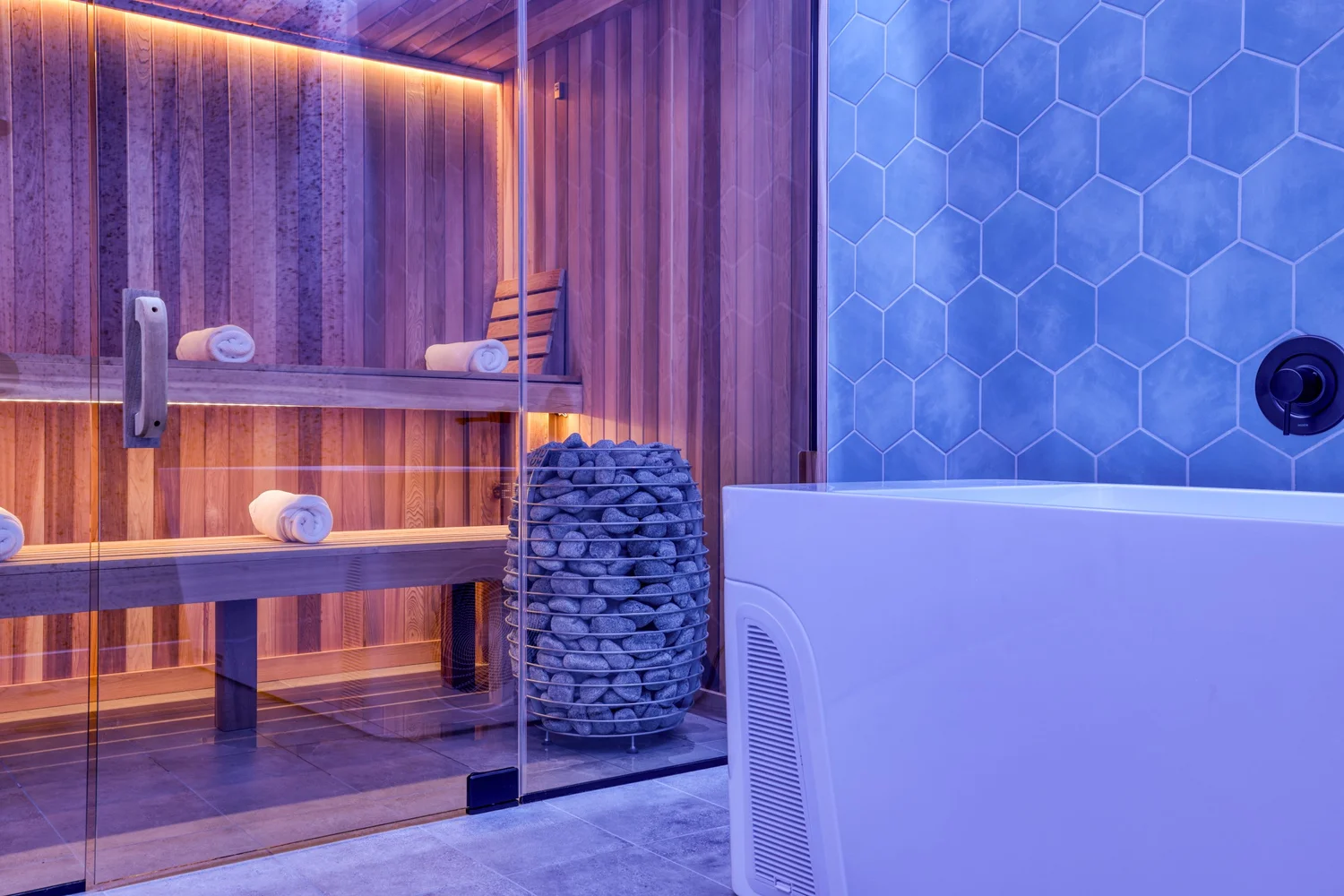
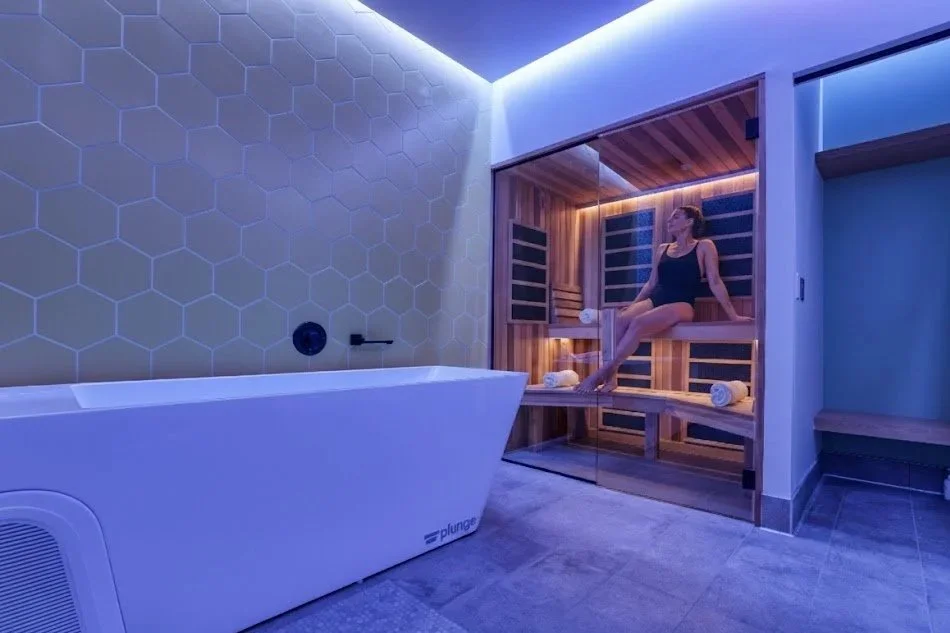
- Private suite. You step into your own room — no shared space, no waiting in line. You can do red light alone, or stack it with our infrared sauna or cold plunge in the same visit.
- Full-body dosing. The panels deliver both red (660 nm) and near-infrared (850 nm) wavelengths, the two best-studied bands for skin and deep tissue. Sessions typically run 10–20 minutes depending on your goal.
- Integrated into a real plan. Red light therapy works best as part of a recovery or longevity routine. Our chiropractic and functional medicine teams help integrate it with the rest of your health plan, so it's not a one-off treatment — it's an input into a real outcome.
- HSA/FSA accepted. Many clients are surprised to learn that red light therapy at a wellness clinic often qualifies. Our team can help you understand whether your plan covers it.
- Local to the Twin Cities metro. Optimum Health is located at 7781 Amana Trail, Inver Grove Heights, MN — convenient for clients in Eagan, Mendota Heights, South St. Paul, Cottage Grove, Apple Valley, and across the Twin Cities.
We differentiate from generic red light panels at salons in three ways: clinical wavelength selection, full-body dosing rather than face-only, and integration with the rest of your recovery routine — sauna, cold plunge, PEMF, chiropractic, and functional medicine — under one roof.
Frequently Asked Questions
How often should I do red light therapy to see results? Most published protocols use 3–5 sessions per week for 8–12 weeks to see skin or pain outcomes. Recovery and energy effects can be noticed earlier. Consistency matters more than intensity — a steady cadence outperforms occasional long sessions.
Is red light therapy safe? Are there side effects? Red light therapy has one of the best safety profiles in clinical light therapy. It uses non-ionizing wavelengths that do not damage DNA. Mild, temporary redness or warmth can occur. People taking photosensitizing medications, those who are pregnant, and anyone with active malignancy should consult their physician before starting — your provider at Optimum Health can help you screen.
Is red light therapy the same as tanning beds? No. Tanning beds use ultraviolet (UV) light, which damages DNA and increases skin cancer risk. Red light therapy uses red and near-infrared wavelengths in a completely different part of the spectrum — and is associated with skin repair, not damage.
Can I combine red light therapy with sauna and cold plunge? Yes — and many clients find this "recovery stack" approach particularly effective. A common sequence at Optimum Health is red light first to prime tissue and mitochondria, infrared sauna for circulation and heat-shock proteins, then a cold plunge to flush inflammation. Our staff can help you sequence sessions for your goal.
Does red light therapy actually help with weight loss or fat reduction? There is some FDA clearance for specific red light devices in body contouring, and small studies show modest circumference reductions. It is not a weight-loss treatment in the traditional sense — it should be paired with a real strength, nutrition, and recovery plan to expect meaningful change. Our functional medicine team can help build that plan.
The Bottom Line
Red light therapy is one of the most evidence-supported, lowest-risk additions you can make to a recovery or longevity routine in 2026. The science is strongest for skin and recovery, promising for pain and mitochondrial support, and still emerging for cognitive and metabolic longevity. None of it is magic — but applied consistently, paired with the rest of a real wellness routine, it earns its place in the stack.
If you've been looking for red light therapy near me in Inver Grove Heights or anywhere in the Twin Cities, we'd be glad to walk you through a session at Optimum Health and help you decide where it fits in your plan.
Book a Red Light Therapy Session → https://optimum.health/combined-book-page