Contrast Therapy (Sauna + Cold Plunge): The Science-Backed Protocol for Recovery and Nervous System Reset
Contrast Therapy (Sauna + Cold Plunge): The Science-Backed Protocol for Recovery and Nervous System Reset
What if one of the most powerful recovery tools available isn’t a supplement, wearable, or prescription — but a simple cycle of heat and cold? Research into contrast therapy — the deliberate alternation between sauna heat and cold plunge immersion — is generating serious attention in both sports medicine and longevity circles. And in 2026, as nervous system regulation emerges as one of the defining wellness priorities of the decade, contrast therapy is moving from niche biohacker practice to evidence-informed recovery staple.
If you’ve been searching for "contrast therapy sauna cold plunge" or wondering what the protocol actually looks like and whether the benefits are real, this guide covers the mechanisms, the research, and what to expect at Optimum Health in Inver Grove Heights, MN — where private contrast therapy suites are available by appointment.
What Is Contrast Therapy?
Contrast therapy refers to the deliberate, repeated cycling between a heat stimulus — most commonly an infrared sauna or traditional steam sauna — and a cold stimulus, typically a cold plunge pool or ice bath. The principle is simple: expose the body to thermal stress in alternating directions, and trigger a cascade of physiological adaptations.
A standard contrast therapy protocol involves 10–15 minutes in a sauna at 150–185°F, followed immediately by 2–3 minutes in a cold plunge at 50–55°F. This cycle is typically repeated 2–3 times per session, finishing in cold if the goal is nervous system activation and alertness, or finishing in heat if the goal is relaxation and sleep preparation.
The practice has roots in Scandinavian sauna culture and Finnish "avanto" (ice swimming), but in the last five years, a growing body of peer-reviewed research has moved contrast therapy from folk tradition to clinical interest. What the science reveals is more nuanced — and more compelling — than the wellness headlines suggest.
How Contrast Therapy Affects Your Cardiovascular System
The most well-documented mechanism behind contrast therapy is its effect on vascular function. When you enter a sauna, your blood vessels dilate (vasodilation) in response to heat, increasing blood flow to the skin and periphery. Your heart rate rises. Cardiac output increases. When you step into a cold plunge, the opposite occurs rapidly: blood vessels constrict (vasoconstriction), redirecting blood flow to your core and vital organs.
This alternating expansion and contraction of the vascular system is sometimes called the "vascular pump." Research published in peer-reviewed cardiovascular journals has found that repeated thermal contrast exposure can improve endothelial function — the health of the inner lining of blood vessels — which is a strong predictor of long-term cardiovascular health.
A 2023 study found that contrast therapy improved flow-mediated dilation (a marker of endothelial function) significantly more than either heat or cold alone. Improved endothelial function is associated with lower blood pressure, better circulation, and reduced risk of cardiovascular events over time.
For athletes and active adults, this translates practically: better circulation means more efficient nutrient and oxygen delivery to muscles, and more effective removal of metabolic waste products like lactate after training.
The Nervous System Reset: Why This Is the Trending Benefit in 2026
The Global Wellness Summit’s 2026 Trends Report identified nervous system exhaustion as one of the defining health challenges of the current era. Chronic stress, overstimulation, and poor sleep are keeping millions of people locked in sympathetic nervous system dominance — a persistent "fight or flight" state that drives inflammation, disrupts sleep, and impairs recovery.
Contrast therapy is one of the few non-pharmacological interventions with documented, measurable effects on vagal tone and heart rate variability (HRV) — the two primary biomarkers of parasympathetic nervous system function.
Here’s the mechanism: cold exposure — particularly to the face and upper body — directly stimulates the vagus nerve, the primary nerve of the parasympathetic system. Research shows that cold-water immersion triggers an initial sympathetic surge (the cold shock response), followed by a significant parasympathetic rebound. Your body learns to move rapidly from stress to calm. Repeated practice builds what researchers call "vagal flexibility" — a measurable improvement in your body’s ability to regulate its own stress response.
In practical terms, regular contrast therapy sessions have been associated with improved HRV scores, reduced perceived stress, and better sleep quality. For patients managing chronic stress, adrenal fatigue, or nervous system dysregulation — common presentations in functional medicine — contrast therapy represents a powerful, evidence-adjacent adjunct to clinical care.
Heat Shock Proteins, Inflammation, and Cellular Recovery
Beyond cardiovascular and neurological effects, sauna heat triggers the production of heat shock proteins (HSPs) — a class of proteins that function as cellular chaperones, helping repair misfolded proteins, protect cells from damage, and reduce systemic inflammation.
HSP70, in particular, has been studied for its role in muscle repair, immune regulation, and even neuroprotection. Research out of Finland — where sauna use has been studied longitudinally in populations of thousands — found that regular sauna use (4–7 sessions per week) was associated with significantly reduced all-cause mortality and lower rates of dementia.
The cold plunge component adds a complementary mechanism: cold water immersion reduces exercise-induced muscle damage, decreases pro-inflammatory cytokines in the acute recovery window, and activates norepinephrine release — with one study showing a 300% increase in norepinephrine after cold immersion, contributing to the mood-elevating and focus-sharpening effects that regular users consistently report.
Together, the heat and cold components create a hormetic stimulus — controlled, beneficial stress that prompts the body to adapt and become more resilient.
Contrast Therapy Timing: What Research Says About Protocol
One of the most-searched questions in this space is timing: when should you cold plunge relative to the sauna, and when relative to your workout?
Contrast therapy and resistance training: There is credible research suggesting that cold water immersion immediately after strength training may blunt the mTOR signaling pathway involved in muscle protein synthesis. For this reason, if muscle hypertrophy is your primary goal, it’s worth spacing cold plunge sessions at least 4–6 hours away from resistance training, or limiting them to 1–2 times per week during heavy training blocks. Cold plunge remains highly effective for recovery from endurance training and high-intensity work where performance output — not hypertrophy — is the priority.
Within the contrast session: Ending cold is associated with greater alertness and energy — useful for a daytime session or pre-event. Ending warm is associated with deeper relaxation — better suited for evening use or when sleep optimization is the goal.
Recommended session structure (evidence-informed): - Round 1: 12–15 min sauna → 2–3 min cold plunge - Round 2: 10–12 min sauna → 2–3 min cold plunge - Round 3: 10 min sauna → 2–3 min cold plunge (end cold for alertness; skip final cold or end warm for relaxation) - Total session time: approximately 45–60 minutes - Frequency: 2–4 times per week for general health; daily is appropriate for athletes in active recovery phases
What to Expect at Optimum Health in Inver Grove Heights
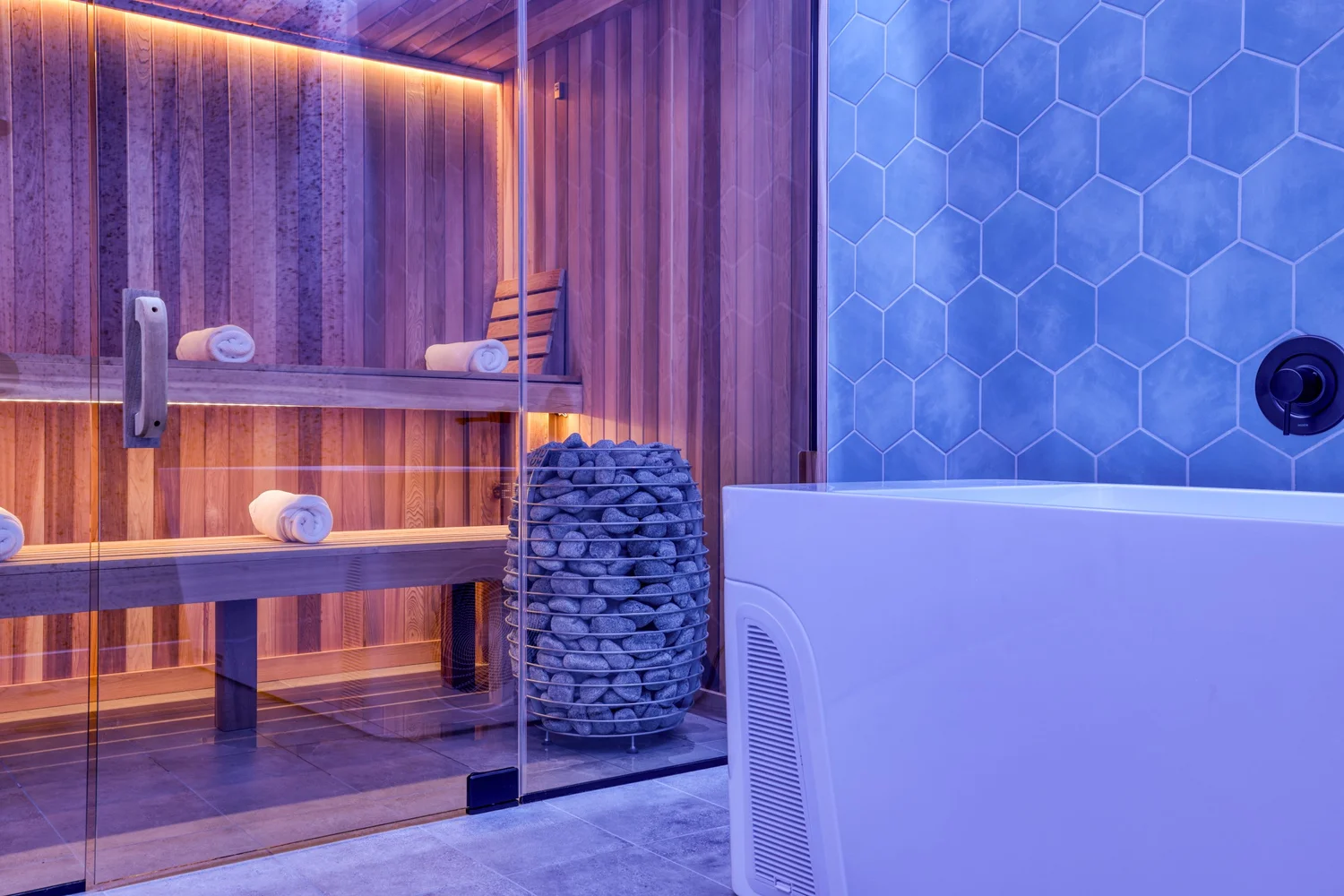
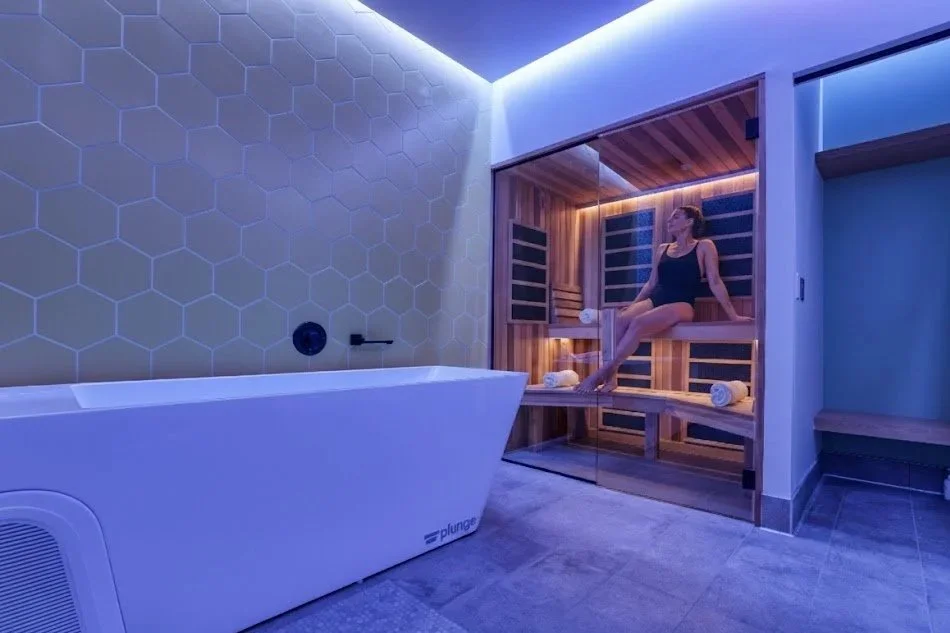
Optimum Health offers contrast therapy in fully private suites — a distinction that sets it apart from the communal sauna-and-cold-plunge clubs that have opened across the Twin Cities in 2025 and 2026. For anyone who values privacy, medical-grade equipment, or a clinically-oriented setting, the difference is significant.
The setup: Each private suite includes a medical-grade full-spectrum infrared sauna and a cold plunge unit maintained at target therapeutic temperatures. You control the session entirely — duration, number of rounds, and whether you finish in heat or cold based on your goals for that day.
Full-spectrum infrared advantage: Optimum uses full-spectrum infrared (near, mid, and far infrared wavelengths) rather than a conventional steam sauna. Full-spectrum infrared heats the body from the inside out, achieving therapeutic core temperature elevation at lower ambient temperatures (typically 120–145°F versus 170–200°F for traditional saunas), making it more accessible for individuals who find dry or steam heat uncomfortable, and allowing longer heat exposure per round.
Integration with other services: Because Optimum is a functional medicine clinic as well as a biohacking facility, contrast therapy can be layered with PEMF therapy, red light/LED therapy, and functional medicine consultations in the same visit — creating a comprehensive recovery and optimization protocol that standalone sauna studios can’t offer.
Location: Inver Grove Heights, MN — conveniently accessible from Eagan, South St. Paul, Mendota Heights, and the broader Twin Cities south metro.
Frequently Asked Questions
How long should I stay in the cold plunge during contrast therapy? Research supports 2–3 minutes per cold immersion round as sufficient to trigger the key physiological responses — including norepinephrine release, vagal stimulation, and cold shock adaptation — without increasing risk. Beginners may start at 60–90 seconds and build tolerance over 2–4 sessions. The temperature matters more than the duration: 50–55°F is the evidence-based target range.
Is contrast therapy safe for beginners? For most healthy adults, yes — with appropriate gradual introduction. If you have a cardiovascular condition, uncontrolled hypertension, Raynaud’s phenomenon, or are pregnant, consult your physician before starting. At Optimum Health, the functional medicine team can help contextualize contrast therapy within your overall health picture.
Does the contrast therapy timing (sauna then cold, or cold then sauna) matter? Yes. Sauna first is the standard protocol supported by most research. The heat phase prepares the cardiovascular system, raises core temperature, and initiates HSP production — the cold plunge then delivers the contrast stimulus and activates the parasympathetic rebound. Beginning with cold and finishing cold (without heat first) reduces the vascular pump effect.
How often should I do contrast therapy to see results? Most peer-reviewed studies showing measurable benefits used protocols of 3–4 sessions per week over 4–8 weeks. Anecdotally and clinically, many people notice improved sleep quality and reduced soreness within the first 1–2 weeks of regular use. For HRV and nervous system benefits, consistency over weeks is more important than session frequency in any single week.
Is contrast therapy the same as cryotherapy? No. Whole-body cryotherapy uses extremely cold air (typically -200°F to -250°F) for very brief exposures (2–3 minutes). Cold plunge immersion uses cold water, which transfers heat from the body approximately 25 times more efficiently than cold air, making it more physiologically potent at the temperatures used. The research base for cold water immersion is also substantially larger than for cryotherapy.
The Bottom Line
Contrast therapy — alternating sauna and cold plunge — is one of the most well-supported, accessible biohacking protocols available today. The evidence supports its benefits for cardiovascular endothelial function, nervous system resilience, cellular repair via heat shock proteins, and recovery from training. In 2026, as nervous system regulation moves to the center of functional health conversations, contrast therapy sits at the intersection of ancient practice and modern physiology.
If you’re in the Twin Cities and looking for a private, clinical-grade contrast therapy experience in Inver Grove Heights, Optimum Health offers the infrastructure, privacy, and integrative care context to make it a meaningful part of your health protocol — not just an occasional wellness treat.
Book a Contrast Therapy Session at Optimum Health
Private infrared sauna + cold plunge suites available in Inver Grove Heights, MN. Book online in minutes.
TEST INJECTION VIA PASTE EVENT
If this persists after save, the paste approach works.